Waiting for the ding
Amy Zuell has spent countless hours in the gallery as a Mediator bringing our exhibitions to life for visitors like you. Now, her own artwork is doing the talking.
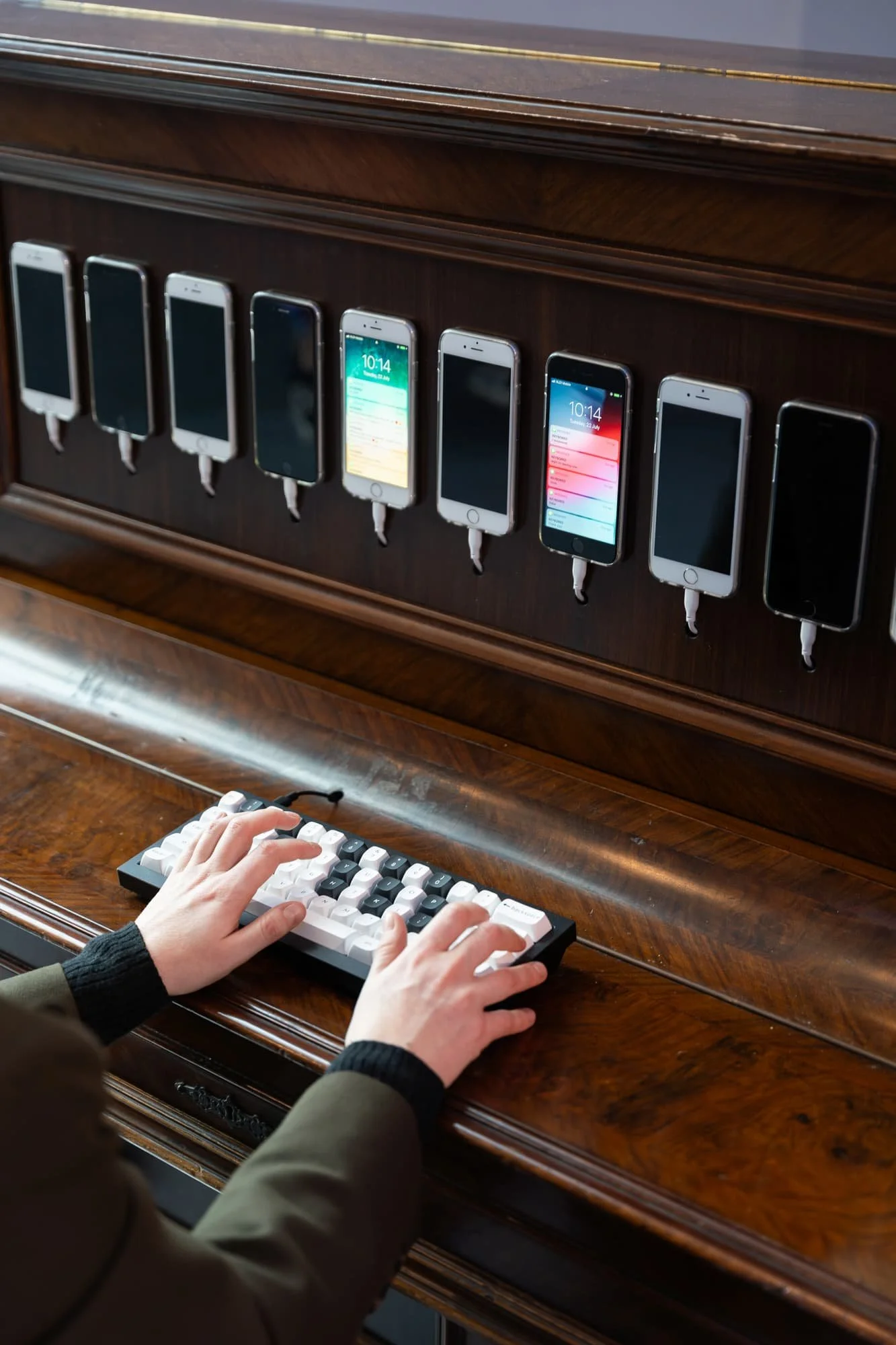
Showing in DISTRACTION, Keybored plays with the iconic iPhone notification sound. You know? The one that makes you instinctively check your pocket. In Keybored, Amy takes these carefully engineered, attention-grabbing sounds and transforms them into something new: a melodic instrument where notification dings replace piano keys.
“We struggle to be bored because we spend so much time with distractions—always scrolling, always checking notifications, always being online and plugged in and connected”
Amy Zuell (AUS) is a creative technologist with a passion for crafting joyful experiences. From foosball to Gameboys, gemstones to 3D printed chocolate, she finds wonder in the little things and spends her time creating interactive experiences to share this with others. With a background in mechatronics engineering, Amy is a maker and an ever improving and expanding jack-of-most-trades.
Amy, obviously the Mediator to artist pipeline is pretty cool. What inspired you to submit this work as part of our DISTRACTION open call?
So I started working as a Mediator while I was finishing up my degree in a Bachelor of Science (mechatronics). It gave me a peek into the behind-the-scenes of how a museum runs. I wanted to get involved in the museum space – making installations and interactives. I saw the open call come up for DISTRACTION and I thought that was a really cool theme. I’d toyed with the idea of putting out my own work to be part of Science Gallery before. And so I stewed on it for a bit and ended up leaving it right ‘til the last day to throw my hat into the ring and put something forward for the open call. And here we are!
Can you tell us a bit about the title of this work, Keybored.
I love the title Keybored! This is one of the ideas that I came up with first. And I was like “I have to make a work that fits the title ‘Keybored!’” So Keybored is a three-way pun between keyboard as in typing, keyboard as in piano, and key-bored as in boredom. I wanted a work that blended all three of those things.
How does the concept of boredom factor into the work?
The theme of the exhibition is DISTRACTION. And one thing I find interesting with visitors at this work in particular, is that the work takes a couple seconds to come through. Because it’s sending all these real messages from phone to phone. And so, people will sit down and type at the keyboard and go, “Oh, nothing happened! It didn’t work! But they just have to wait a few seconds and let the messages come through. It’s been interesting watching that. I think it’s important that there’s a bit of delay because we’re so used to this instant gratification.
Boredom plays into the theme of DISTRACTION in that distractions occur when you are bored. We struggle to be bored because we spend so much time with distractions—always scrolling, always checking notifications, always being online and plugged in and connected. I wanted to create a work that required you to wait a little, to have a pause and sit in that little space of boredom.
The iPhone notification sound is so deeply conditioned that it can feel almost involuntary. Were you surprised by your reaction to hearing it recontextualised as music?
I think the Keybored sounds really nice! I was expecting to create a monster. I was expecting to create something that was so obnoxious, as I think the ding noise is so annoying. But when they are each tuned to their own note, and played together, it’s actually quite nice. It’s quite pleasant with the little dings echoing throughout the gallery.
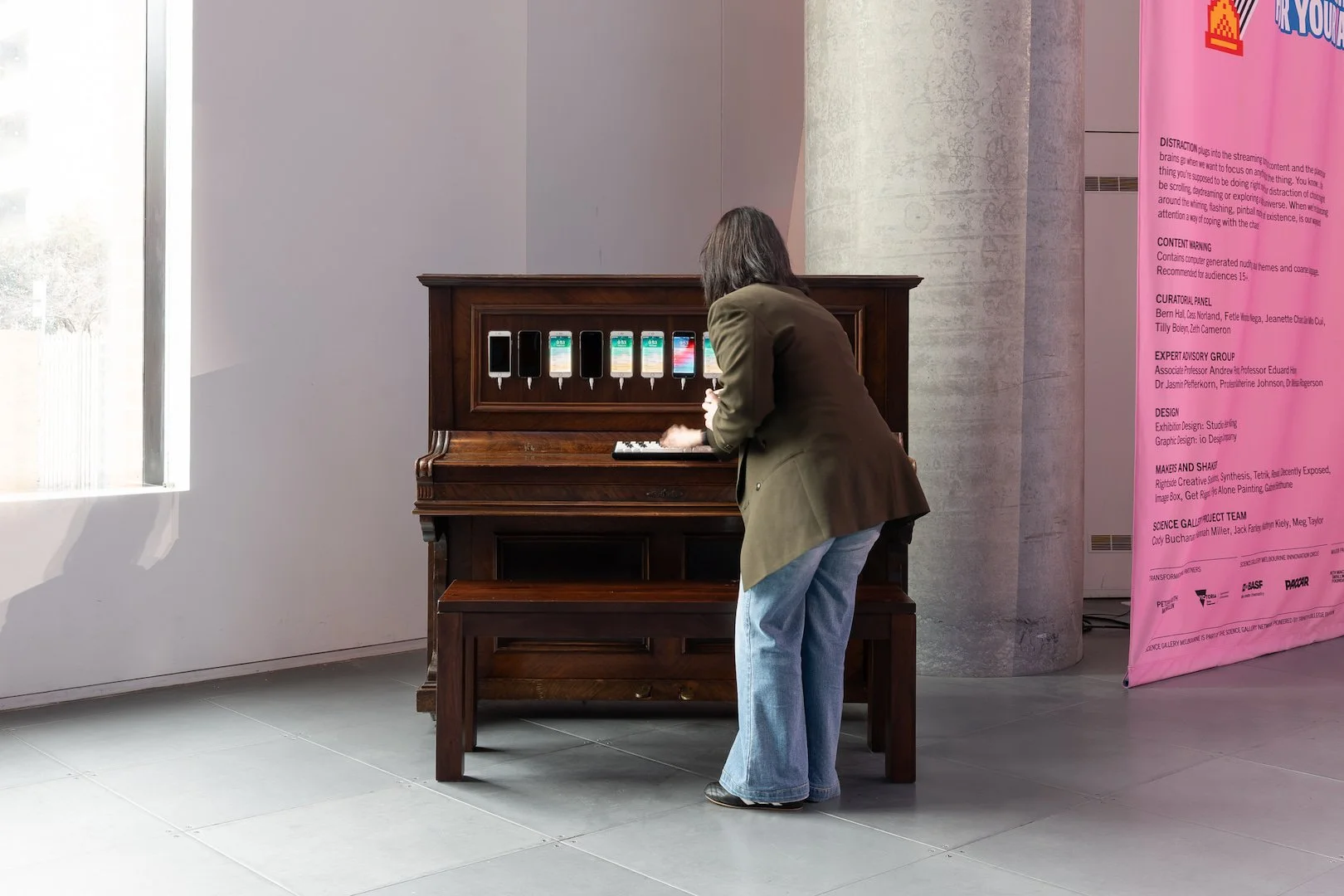
Photography credit: Astrid Mulder
What’s the story behind the messages that pop up on each iPhone?
The messages that pop up on the Keybored have all been curated by me. Half of them are real messages that I’ve sent or received. There are messages from my parents, my family, my friends. I put out a call for people to submit messages, and I went through and added those in. Then half of them are things that I’ve written that sound like messages. So different emojis and different ways of saying hello. My favourite ones are the spam messages eg: “Urgent notice: Your Toll bill is past due. Please...”
Sound art can be invisible in a way visual work isn’t. What kinds of responses or behaviours from visitors have stood out to you so far?
I love watching the way kids come up and interact. I love watching them press random buttons and then random dings go off – which is basically what the work is – Press buttons, Keybored go ding.
As a Mediator, you’ve spent years watching how people behave in the gallery. Did those observations shape how you designed the way audiences interact with this work?
As a Mediator, someone will come up to a work and then you’ll explain it and have a great conversation and then they’ll turn around and say “You know so much! Did you make this? Is this your work?” And you have to turn around and be like, “No”.
“There’s something very satisfying in standing around my own work and having visitors interact and them go “Oh did you make this?” And being able to say, “Yes, I did actually! This is my work!” ”
See, hear and play Keybored by Amy Zuell as part of our latest exhibition DISTRACTION.