
Rethinking connection in a digital world
Jess Rowlings has built her career at the intersection of people and technology, using games to bring people together in ways that feel meaningful, flexible and genuinely human.
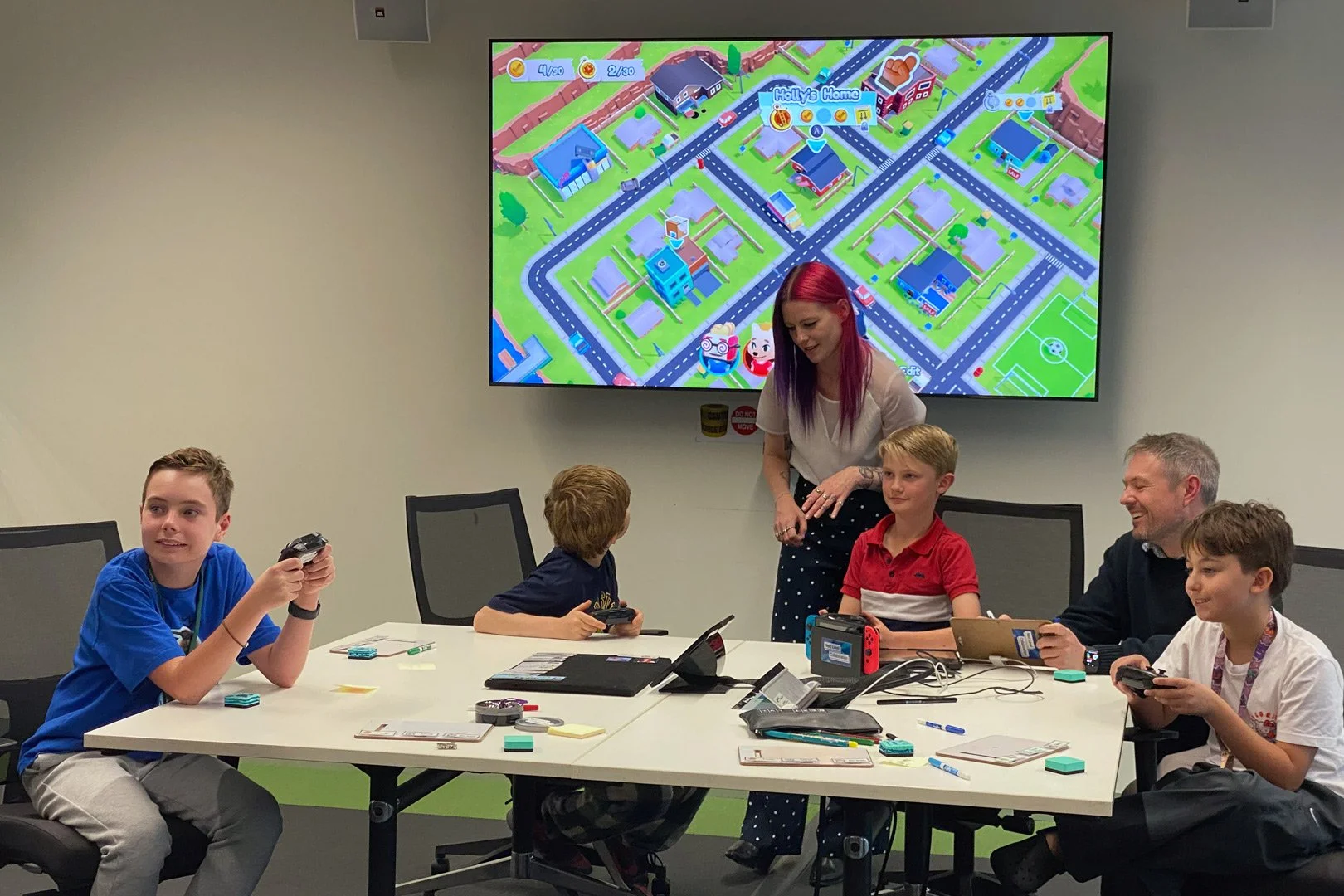
Jess Rowlings at a Next Level Collaboration session
As co-founder and CEO of Next Level Collaboration, Jess works with neurodivergent young people to develop social connection through cooperative video games – turning play into a powerful tool for communication and belonging.
A qualified speech pathologist and researcher at the University of Melbourne, Jess’s work is shaped by both professional expertise and lived experience of autism and ADHD. Her practice sits firmly within the world of Human–Computer Interaction, where the focus isn’t just on the technology itself, but on how it supports the ways we connect with each other.
Ahead of our upcoming Future Careers Forum exploring careers in Human–Computer Interaction, Jess shares insights into her career journey, the evolving role of technology in our lives, and why designing for connection matters more than ever.
Our current exhibition DISTRACTION explores how attention is shaped and fragmented today. In your work, how do you see technology influencing the way we focus, connect, or lose connection?
Technology has evolved so quickly over the last 30 years, and it has really changed how we go about a lot of things in life. Smartphones have made a lot of things much easier (like navigating with GPS instead of a paper map) and online spaces have made staying connected across physical distance much more accessible. That being said, tech is now quite deeply integrated into our daily lives so technical issues can also have a huge impact on how we connect if things go wrong. We see this when major providers have a tech outage - a lot of systems suddenly stop working and it can be hard to find workarounds on the fly!
Human–Computer Interaction often centres on designing for connection – but connection can mean many things. What does “meaningful connection” look like in your field?
When we talk about technology facilitating connection, we look at the quality of the experience rather than a particular number of hours or frequency using technology. One of the inherent benefits of technology is that it supports communication flexibility, which can be really helpful for supporting strength-based connections where people can engage on their own terms in the ways that feel most comfortable for them.
“Connection, whether it’s in a physical or digital space, should be a positive experience where people can express themselves authentically and individual differences and identities are respected and celebrated. ”
How did you find your way into this space, and was it a direct path or something more unexpected?
Funnily enough, I started out studying an IT degree but I soon came to realise it wasn’t the right fit for me, so I went back to uni and studied speech pathology. I enjoyed the research methods side of my speech pathology degree (and was one of the few people who actually turned up to the research classes!) so ended up applying for a research role at the University of Melbourne. I’ve always been a huge nerd, and my manager in this role introduced me to his colleague A/Prof Matt Harrison because “he has a Super Nintendo in his office and you’d get along.” A few lockdown Zooms to talk about retro games led to Matt and I deciding to start a social enterprise, and we became co-founders at Next Level Collaboration!
Can you share a moment in your career where your understanding of human–technology relationships shifted in a meaningful way?
I know for me personally video games have been such a big part of my life, but it has been amazing to see this happen for the neurodivergent young people I work with too. A lot of the kids I work with enjoy playing with video games, but the value of gaming for them is not limited to their direct interactions with the technology. Their topic knowledge and shared language around video games is a huge area of strength that can be leveraged to help build meaningful social connections through an area of mutual interest. I have witnessed some brilliant discussions between kids wanting to establish which SEGA Saturn controller model is truly the best (it’s the Model 2)!
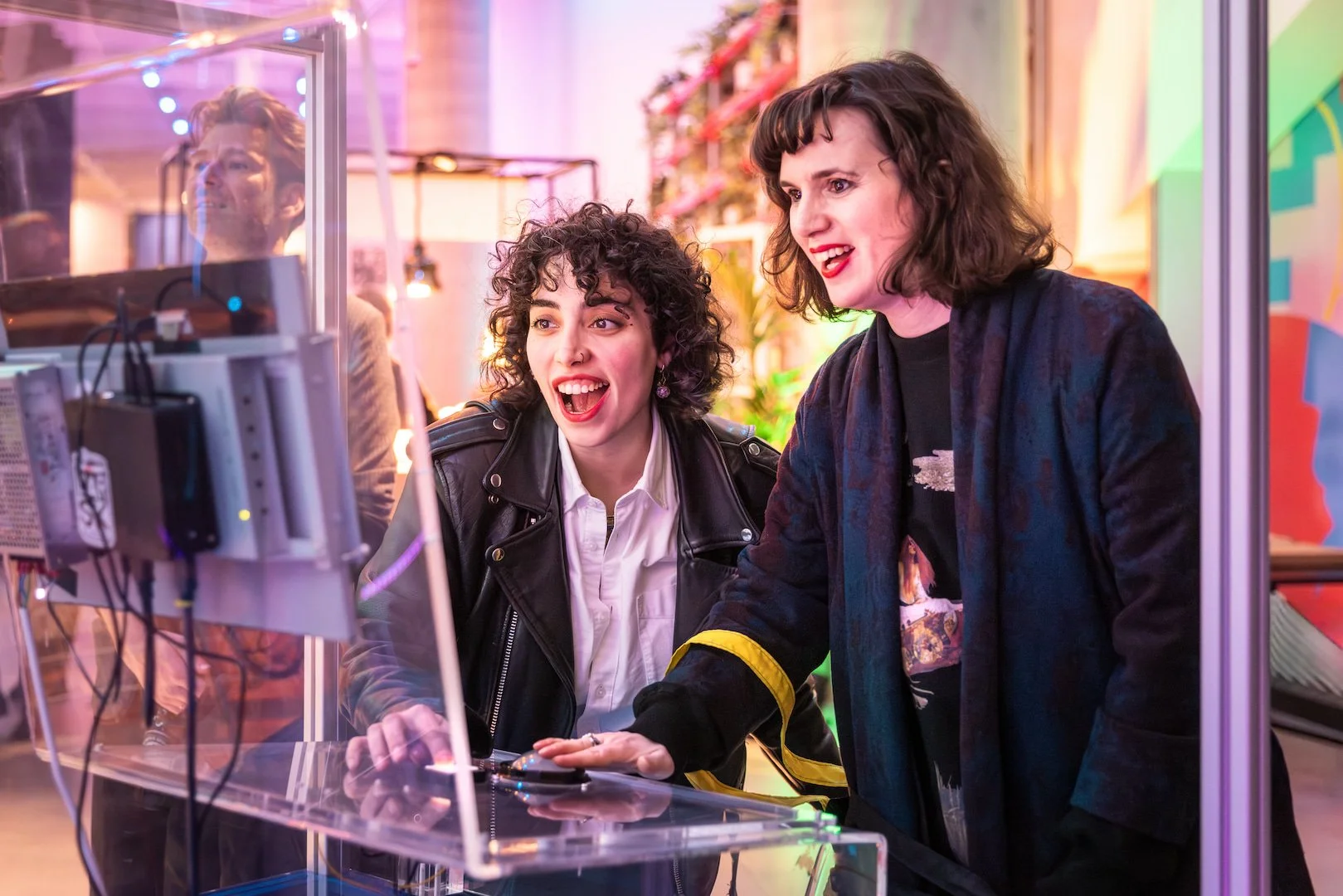
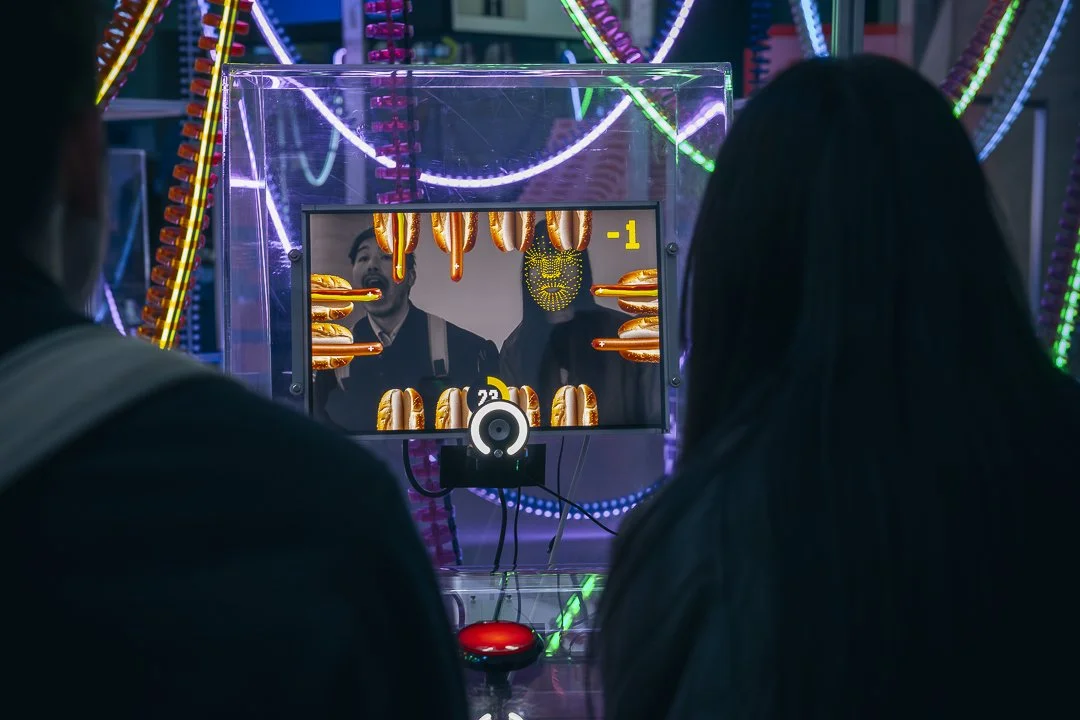
Video games in the DISTRACTION arcade.
What role do lived experiences – whether cultural, neurological, or personal – play in shaping how you design or create with technology?
Humans are diverse in so many ways which is a wonderful thing, and the natural variation between us also influences how we see and engage with the world. In the games industry the idea that “games are for everyone” has gotten more and more traction so there is an increasing focus on accessibility which is fantastic. Engaging with and learning from lived experience is key to truly understanding what different communities need to feel included in games (or other technologies). We actively encourage the kids at Next Level Collaboration to give us feedback on what is and isn’t working for them in terms of games we play during sessions, and those conversations give us some brilliant insights into their strengths and needs. I’m also looking at accessible and inclusive game design for neurodivergent women as part of my PhD.
As technologies continue to evolve, what gives you hope about the future of how we’ll interact with each other, and with the systems we build?
As a kid I never considered a career in games as an option, because I never saw any girls like me in the field. It gives me a lot of hope seeing so much more diversity in the tech sector now compared to when I was younger. There is still a lot of work to be done, but the more representation of different communities we can involve in the design and development of technology, the more we can create technology that is inclusive for everyone and can be adapted to cater for individual needs and differences.
Jess Rowlings will be joining our next Future Careers Forum, exploring how careers in Human–Computer Interaction are shaping the ways we connect – with each other, with technology, and with the world around us. Teachers can register to stream live on Tuesday 28 April or watch the recording later in class.
Find out more about Learning Experiences for secondary students at Science Gallery Melbourne.