
TELE-PRESENT WIND (MARS WIND VERSION)
David Bowen, in collaboration with the NASA Jet Propulsion Laboratory. With thanks to the System Garden, University of Melbourne.
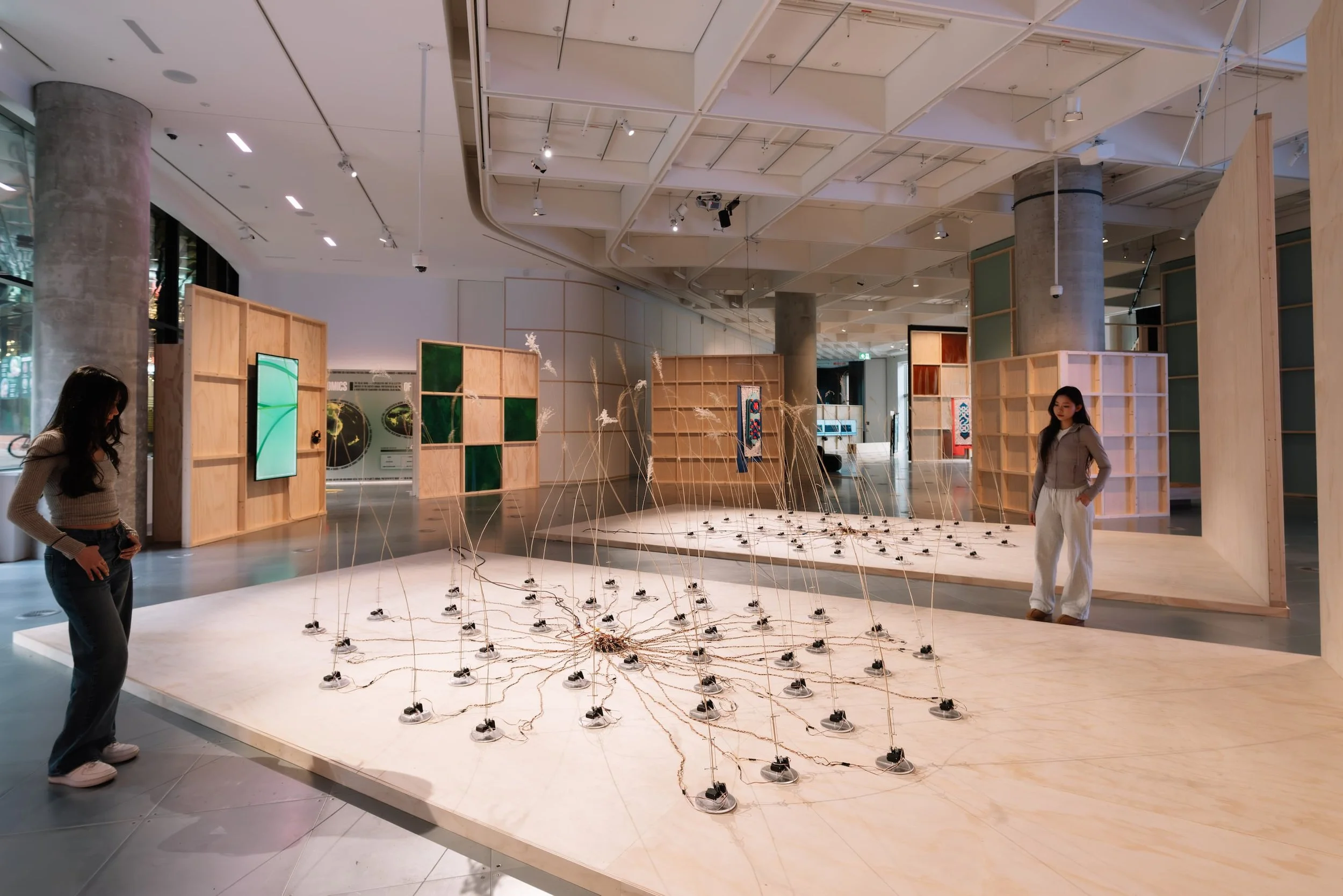
What would it be like to live on Mars?
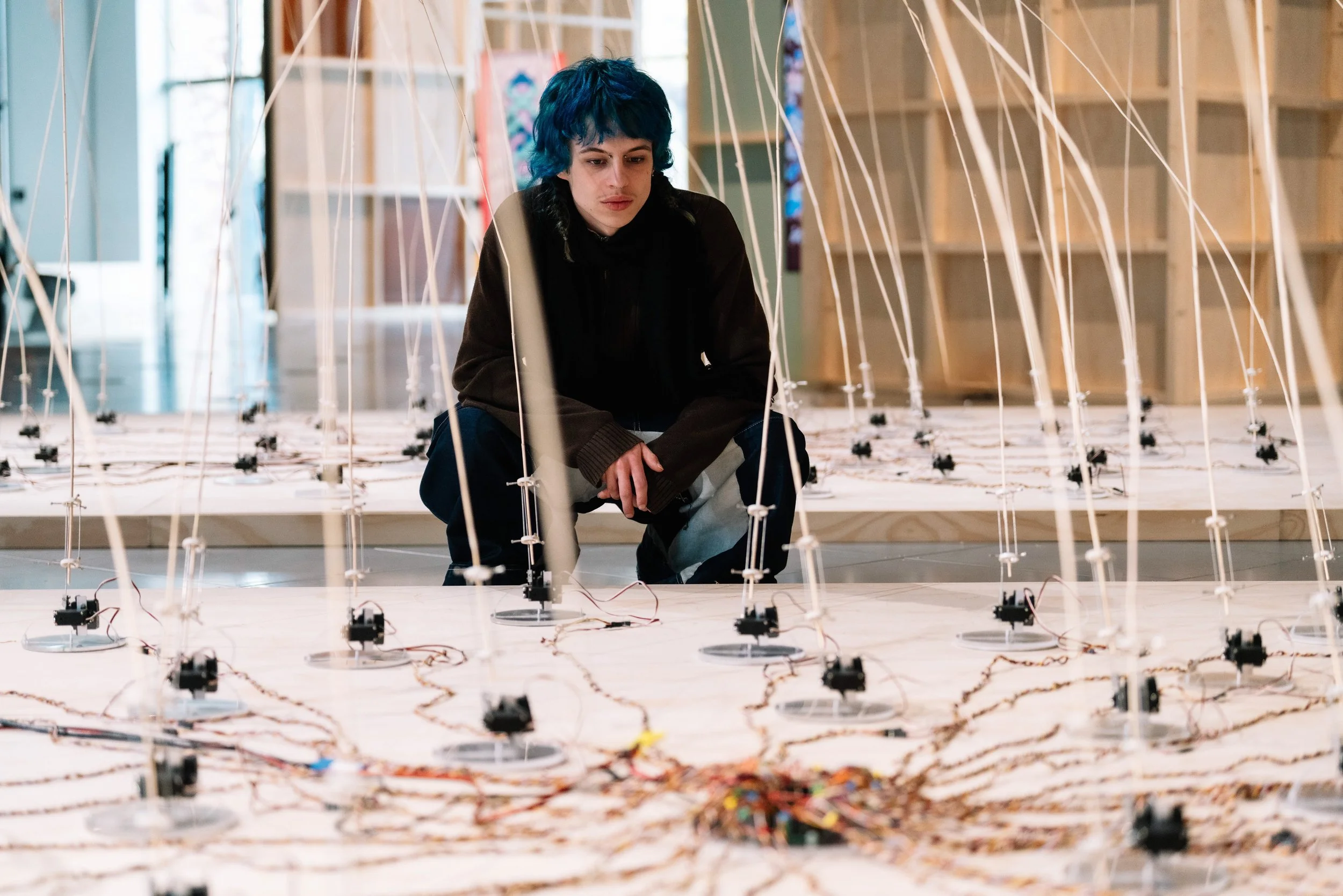
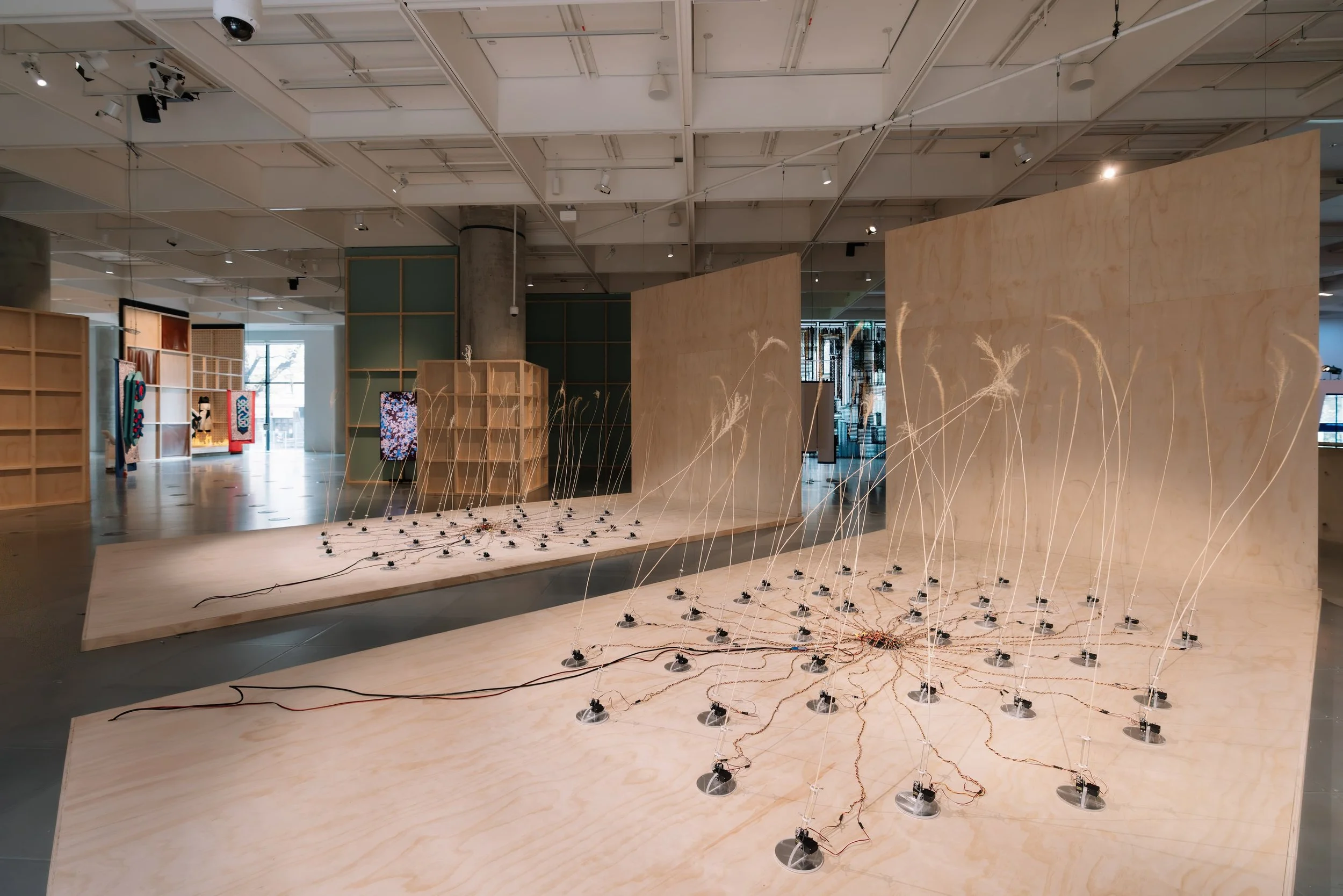
An open field of grass might be the most beautiful place to watch the wind in motion. Rippling with delicate patterns, grass makes the subtle shifts in air flow visible. We are very familiar with the wind patterns of Earth, but what would it be like to experience the winds on Mars? These grasses sway based on data collected from the wind sensor on the Perseverance Mars rover. Suggested by some as a potential new home for humanity, the environment on Mars is vastly different to Earth. Pause and consider the movement of grass in Martian wind - it might shift your ideas about the possibilities of living on another planet.
Would you leave Earth and never feel the wind on your skin again?
BIOGRAPHY
David Bowen is a studio artist and educator known for his kinetic sculptures that are driven by real-world data from natural phenomenon. While technology has enabled us to control and model phenomena with unprecedented precision, it may also provide a means to understand the world in a more intimate, visceral way. He is currently an Associate Professor of Sculpture and Physical Computing at the University of Minnesota.
With thanks to the NASA Jet Propulsion Laboratory and Dr. José A Rodríguez-Manfredi, lead scientist on the Mars Environmental Dynamics Analyzer on Perseverance who assisted us in collecting the wind data for the project.
The grass, Miscanthus transmorrisonensis, was grown in the System Garden, University of Melbourne and generously provided by Virginia McNally and Dominic Napoleone. The System Garden is a unique garden showcasing plant diversity while promoting social interaction and learning.
Photography credit: Phoebe Powell