
ECSTATIC CORPSE
KS Brewer with sound design and composition by Senem Pirler.
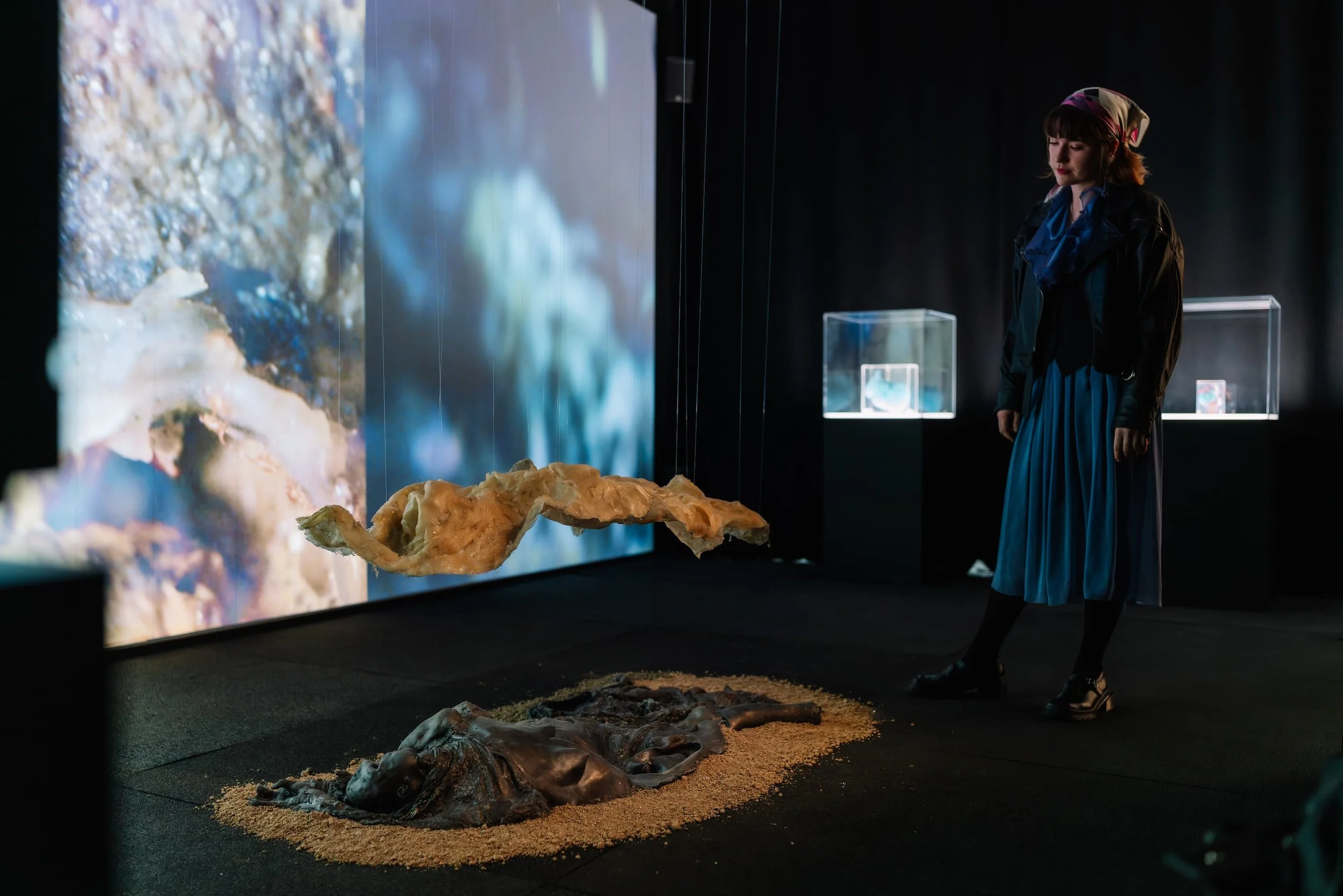
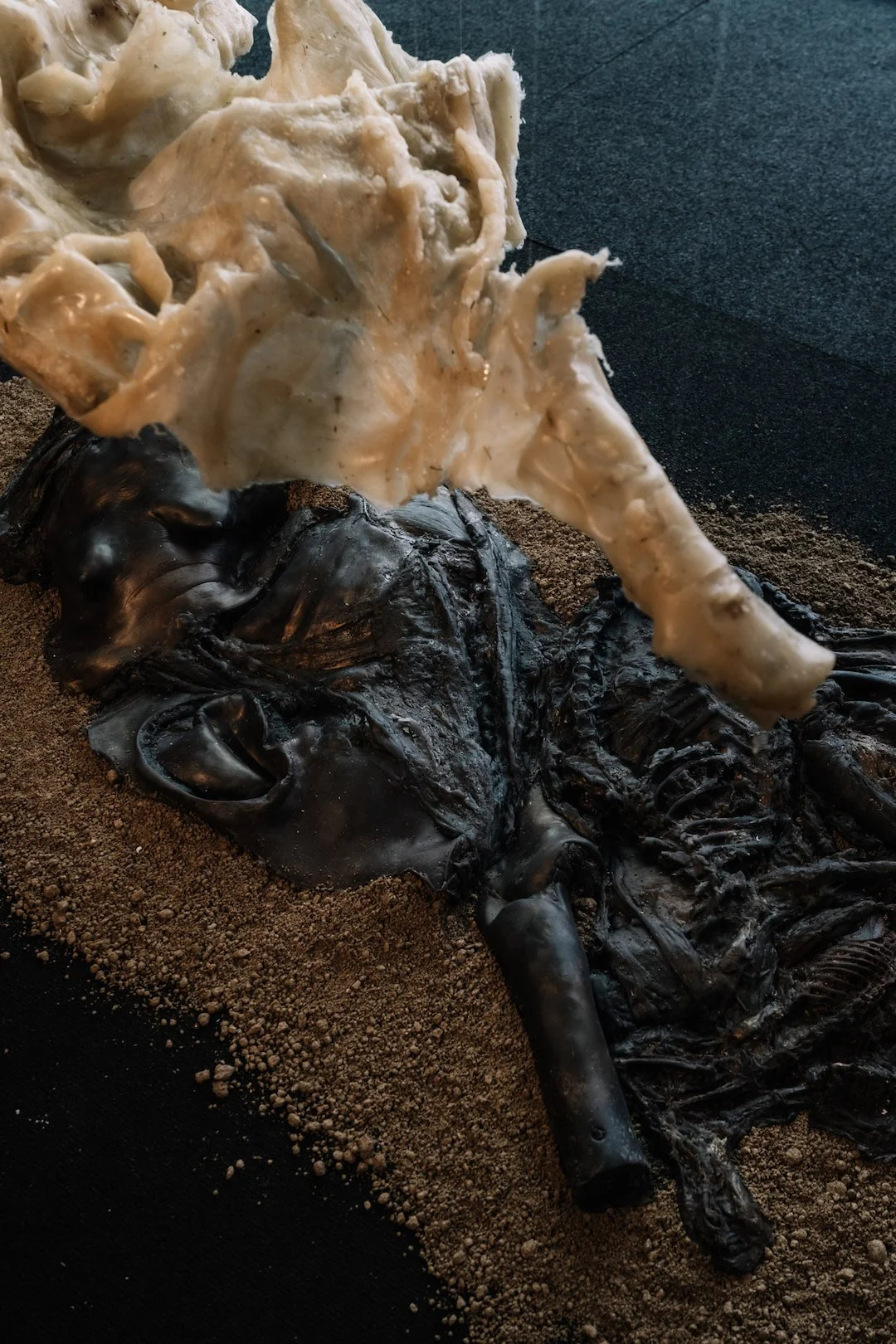
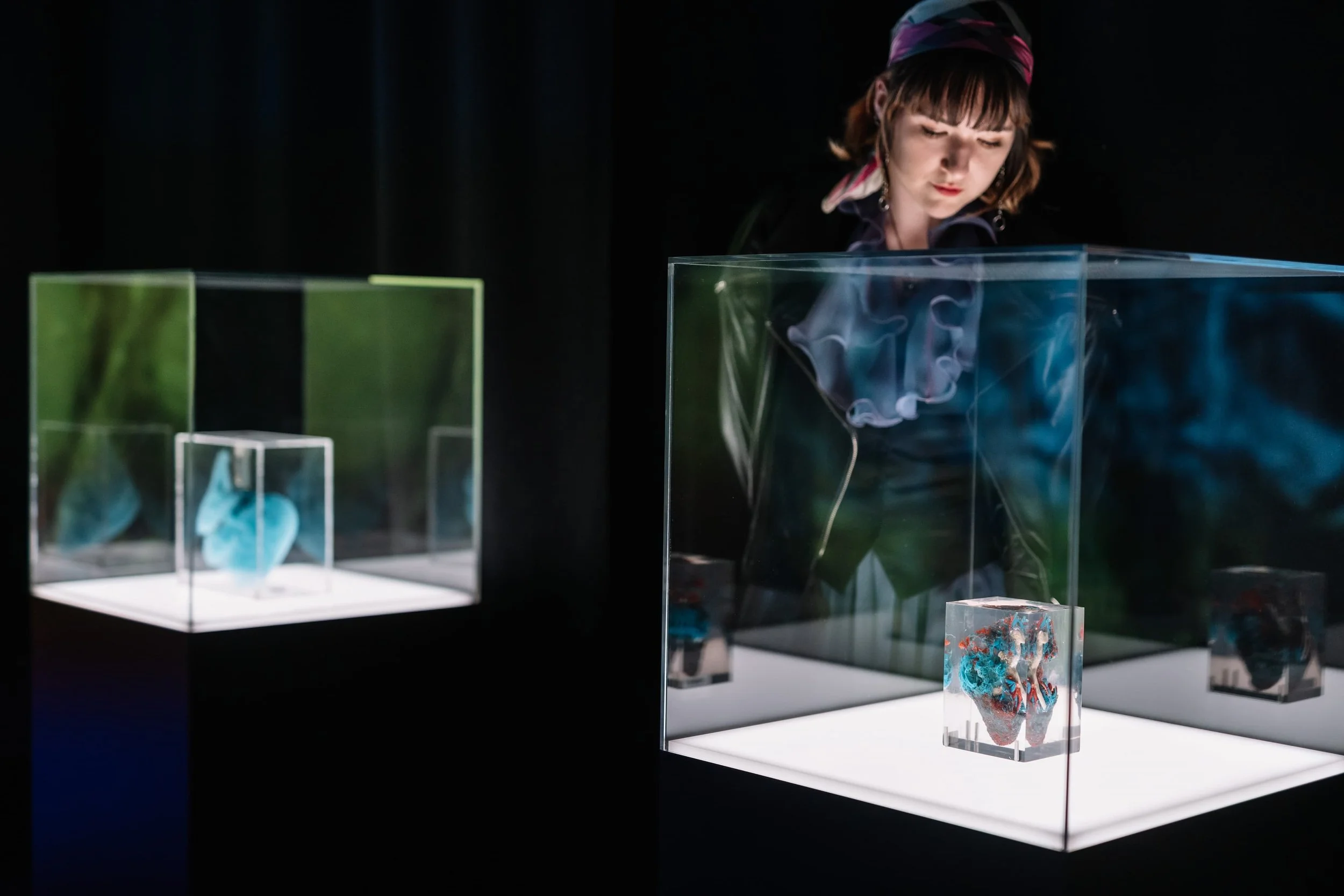
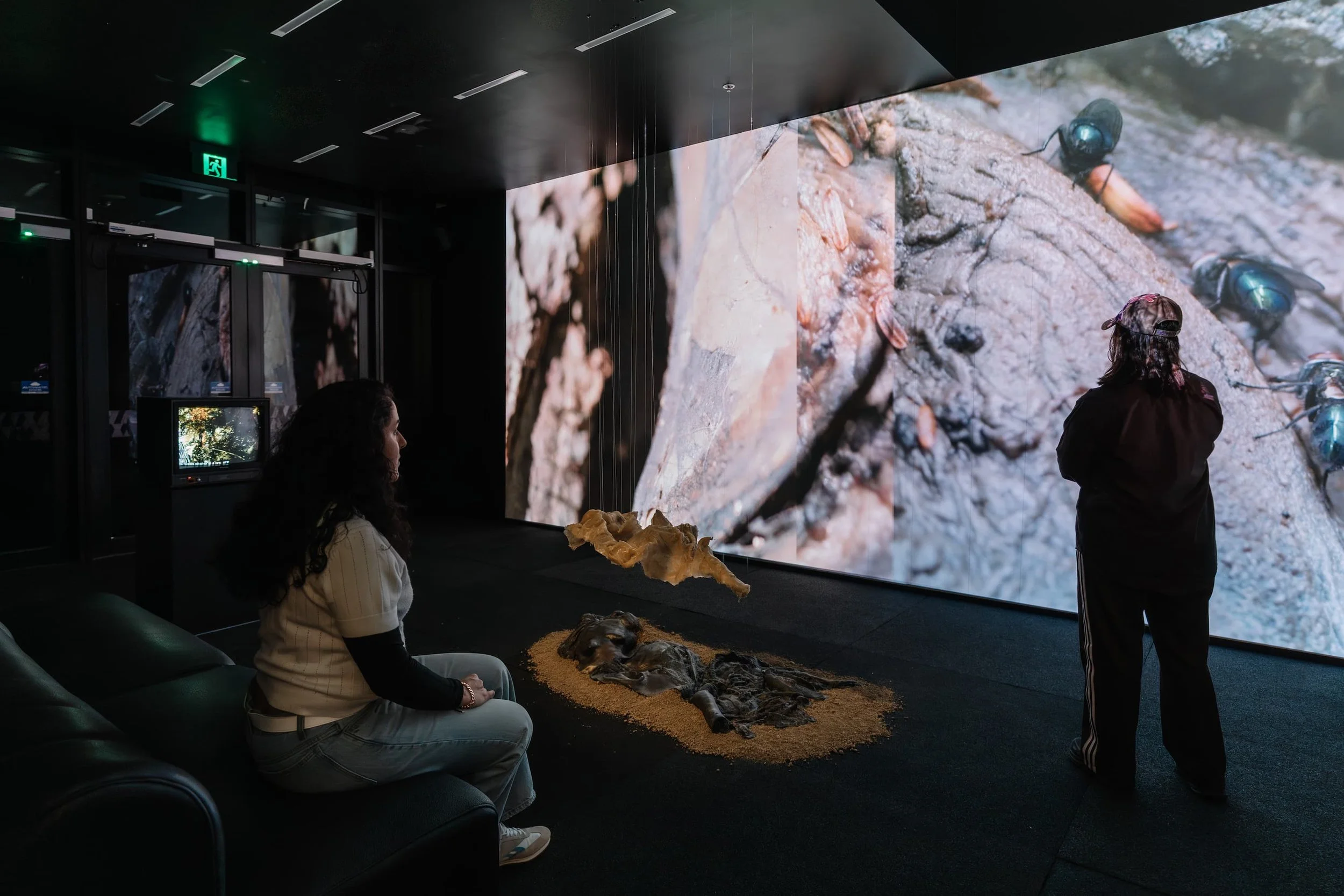
What if decay could be a source of ecstasy?
The work explores the capacity for elation and sensuous relation in the face of decomposition. The realities of death and decay are ever-present, yet often distanced from our experiences, creating a disconnect. This installation features a multi-channel video of decaying cow flesh (heart, liver, leg, ribs) shrouded in bioplastic, alongside an abstracted body cast from animal corpses and medical manikins. As undulating waves of fly and maggot sounds envelop the space, the piece imagines decay as an ecstatic unbinding at the material level, where the body transcends its form.
How might this intimate encounter with decay reshape your relationship with mortality?
BIOGRAPHIES
KS Brewer (they/she) is a transdisciplinary artist-researcher and Ph.D. candidate in Electronic Arts at Rensselaer Polytechnic Institute. Their work explores preserving and extending life in medical and ecological contexts, and alternatives made possible by queering relationships to death and decay. Using CPR manikins, flesh flies, and corpses, Brewer’s pieces engage multiple senses through various mediums - video, audio, sculpture, and installation - aiming to create affective encounters that challenge normative understandings of mortality.
Senem Pirler (she/her) is an artist, sonic improviser, and educator. Pirler’s interdisciplinary work crosses over into sound art, performance, video art, and installation. She has exhibited work nationally and internationally.
List of featured organisms:
Living:
Blowfly species (Calliphoridae family)
Flesh fly species (Sarcophagidae family)
American Carrion Beetle (Necrophila americana)
Carrion Beetle (Nicrophorus tomentosus)
Gold-and-brown Rove Beetle (Ontholestes cingulatus)
Sidewalk Mite (Balaustiinae spp.)
Green Frog (Lithobates clamitans)
Pickerel Frog (Lithobates palustris)
Red-backed Salamander (Plethodon cinereus)
Raven (Corvus corax)
Turkey Vulture (Cathartes aura)
Decomposing:
Hereford cow (Bos taurus)
White-tailed deer (Odocoileus virginianus)
Rock Dove (pigeon) (Columba livia)
Virginia Opossum (Didelphis virginiana)
Northern Short-tailed Shrew (Blarina brevicauda)
With special thanks to the Harry Brookes Allen Museum of Anatomy and Pathology which is one of Australia's largest collections of human tissue specimens, animal anatomy specimens, and historical anatomical models, offering students and researchers a unique insight into the human body. Although the museum is not normally open to the public, tours of the museum are available for biology and medical professionals and students.
Rohan Long is the curator of the Harry Brookes Allen Museum of Anatomy and Pathology in the Faculty of Medicine, Dentistry and Health Sciences at the University of Melbourne. He has been managing and curating biological museum collections at the University of Melbourne for over a decade, previously working as the collection manager of the Tiegs Zoology Museum from 2013 to 2018.
Photography credit: Phoebe Powell