
CÉLULAS MADRE
Patricia Piccinini
What does hope look like in science today?
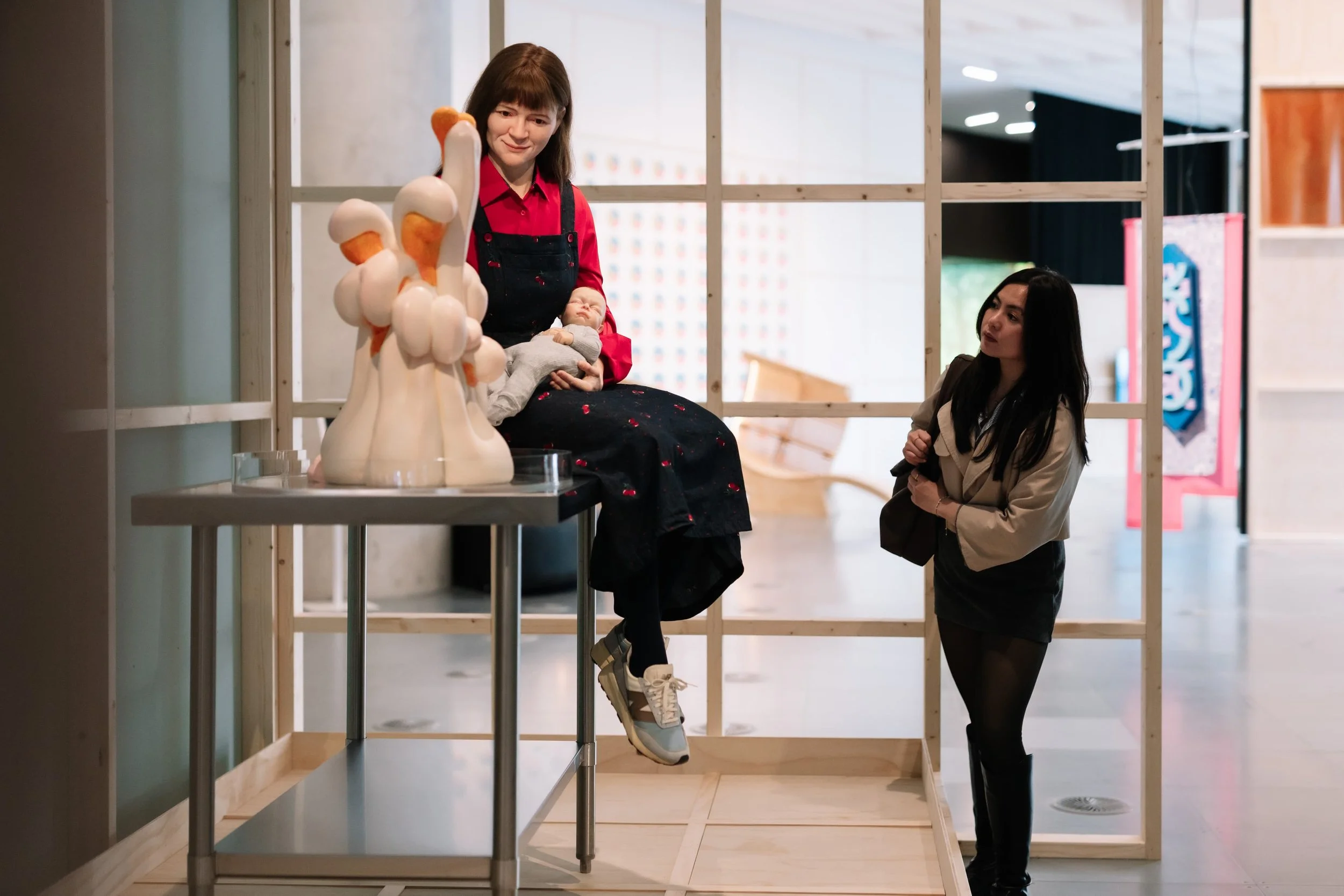
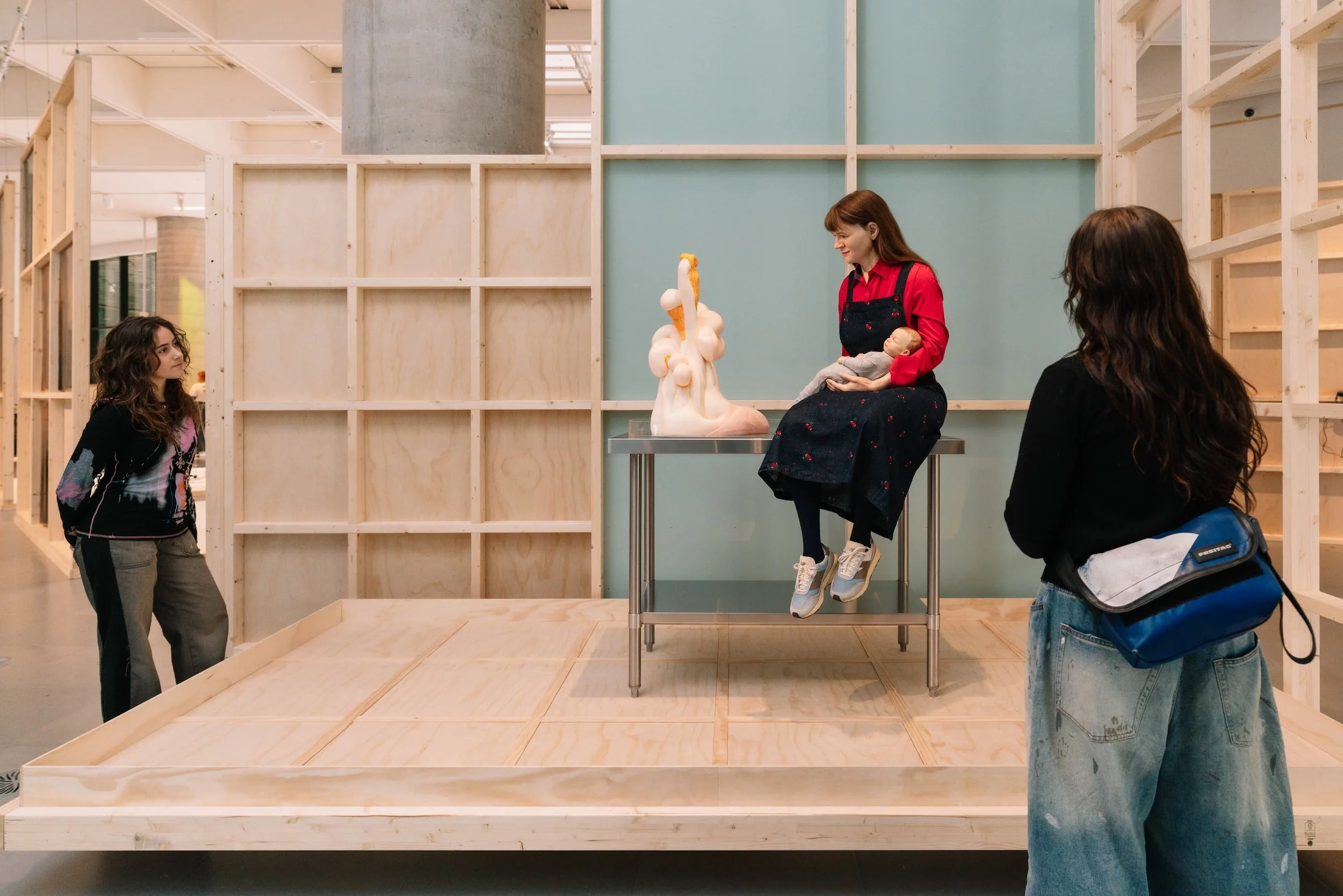
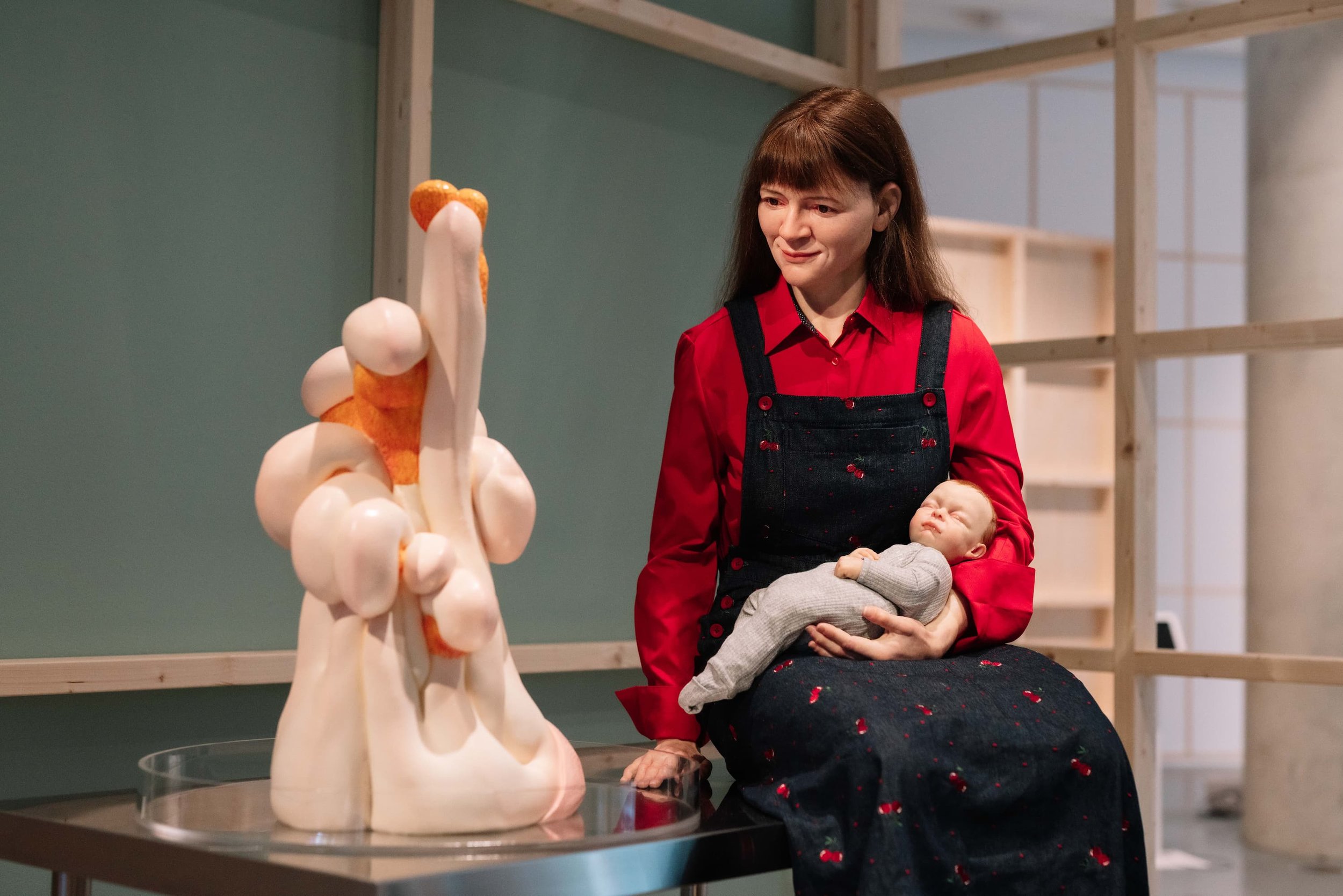
Células Madre, which translates to "mother cells" and "stem cells" in Spanish, revisits Patricia’s earlier work, reimagining its central figure decades later. The child has grown into an adult, coexisting with an amorphous, possibly life-supporting structure shaped by contemporary stem cell research. She nurses her child, gazing at this surreal plant-like object with care, entirely at ease - perhaps she is even its gardener. Inspired by conversations with researchers from reNEW Melbourne and visits to their labs at Murdoch Children’s Research Institute, this work explores how stem cell technologies have transitioned from speculative futures to tangible scientific practices. Together with Patricia’s 2002 piece Still Life with Stem Cells, these works examine the hopes and anxieties of the past while expressing cautious optimism for the future.
What possibilities might this evolution in science hold for future generations?
BIOGRAPHY
Patricia Piccinini is an Australian artist whose work encompasses sculpture, photography, video and drawing. Her practice examines the increasingly nebulous boundary between the artificial and the natural as it appears in contemporary culture and ideas. Her surreal drawings, hybrid animals and vehicular creatures question the way that contemporary technology and culture changes our understanding of what it means to be human and wonders at our relationships with – and responsibilities towards – that which we create.
Over the past year, Patricia has been an artist in residence at Science Gallery, connecting with stem cell scientists at reNEW Melbourne, based at the Murdoch Children’s Research Institute.
This work was commissioned for EMERGENCE[Y] through the support of reNEW, the Novo Nordisk Foundation Center for Stem Cell Medicine. It is part of the reNEW Hope Springs Eternal transnational collaboration with Medical Museion, Copenhagen and Rijksmuseum Boerhaave, Leiden. Through reNEW’s support, exhibits at each gallery have been designed in collaboration with scientists to engage audiences with emerging stem cell research.
The history of stem cell research – Origins, breakthroughs, controversies. Created by the Hope Springs Eternal team at the Medical Museipon in Copenhagen, this timeline highlights selected origins, controversies and breakthroughs in the history of stem cell research. Read, among other things, about Frankenstein, skin grafts, and Dolly the Sheep.
WHAT IS A STEM CELL? This animation introduces stem cells, and is a collaboration between the animator, exhibition designers, curators, and stem cell scientists. The starting point was an image of a cell as a ball of clay – malleable but still resistant; full of potential but demanding careful handling. Animation and sound design: Rasmus Yde Søndergaard
Photography credit: Phoebe Powell